
Hip arthritis
Pain, stiffness and reduced mobility managed through education, exercise, medication, selected injections or surgery where appropriate.
Hip and knee
Orthopaedic assessment and treatment for arthritis, joint replacement, sports injury and fractures, with physiotherapy, exercise physiology, imaging and nursing connected across the pathway.
A referral is generally required for an orthopaedic appointment. Physiotherapy and exercise physiology can generally be booked directly.

How the pathway can work
Some people begin directly with physiotherapy after a knee injury or with exercise physiology to build capacity. Others arrive with a GP referral for joint replacement or a complex diagnosis.
Orthopaedic assessment for diagnosis and a clear explanation of the problem, covering non-operative management and joint replacement or reconstruction where it is warranted. A current referral is generally required.
Direct assessment, symptom management, prehabilitation and rehabilitation for hip and knee conditions.
Explore physiotherapy →Whichever way you start, on-site X-ray and ultrasound, exercise rehabilitation and nursing care connect to the same plan rather than being a separate referral.
Specialist depth for decisions that need it
Dr Goudar provides non-operative and operative care for hip and knee conditions, including joint replacement, sports injuries, fractures and selected bone and soft-tissue conditions.
View Dr Goudar's profile →Conditions and treatment pathways
Pain, stiffness and reduced mobility managed through education, exercise, medication, selected injections or surgery where appropriate.
A staged pathway that considers strength, weight-bearing tolerance, non-operative care and replacement decisions.
Assessment, shared decision-making, preparation, surgery and coordinated rehabilitation for suitable patients.
Individualised planning, including robot-assisted or computer-navigated approaches where clinically appropriate.
Clinical assessment, imaging where useful, rehabilitation and specialist decision-making when instability or mechanical symptoms persist.
Acute and overuse problems managed around safe return to training, work and sport.
Assessment, treatment planning and recovery support for suitable injuries and post-traumatic problems.
Specialist review and appropriate investigation where a lesion, mass or unusual clinical finding requires further assessment.
Wrap-around care, on site
Hip and knee care runs long — before a decision is made, and well after it. Imaging, conditioning, rehabilitation and nutrition support sit alongside the surgical opinion in the same building, so preparing for treatment and recovering from it are handled by people who already know the plan.
 Alicia FreySenior Physiotherapist
 Caitlin BeattyExercise Physiologist
 Sally LivockDietitian
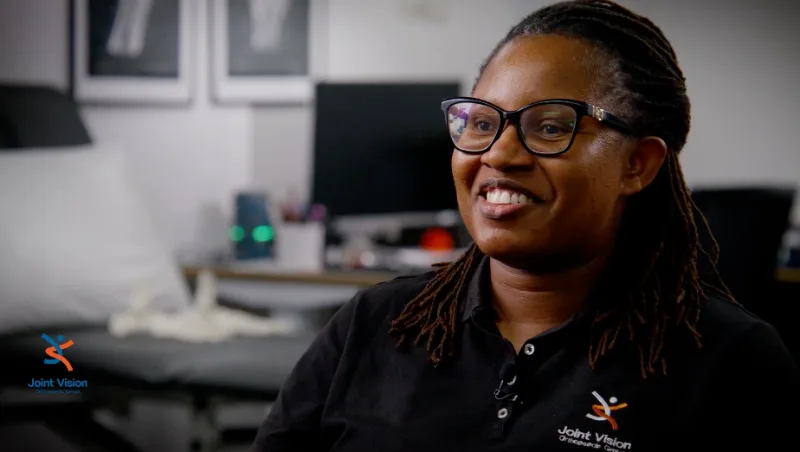 Brenda MavundukureRadiographer
On-site X-ray, physiotherapy, exercise physiology and dietetics are all part of the same pathway. See the full team or read more about imaging and investigations.
One plan
Start with the relevant clinician and clarify the symptoms, function and goals.
Physiotherapy, exercise, education and other options are matched to the clinical picture.
Specialist review supports decisions about procedures or surgery when they become relevant.
Nursing, allied health and follow-up remain connected to the treatment plan.
Your next step
The patient services team can help when referral status or the best first appointment is unclear.