
Shoulder to hand
Do I need shoulder surgery? Dr Jasan Dannaway explains
Do you need shoulder surgery? Dr Jasan Dannaway explains non-surgical options, when surgery may be considered and treatment decisions in Wollongong.
Back to Insights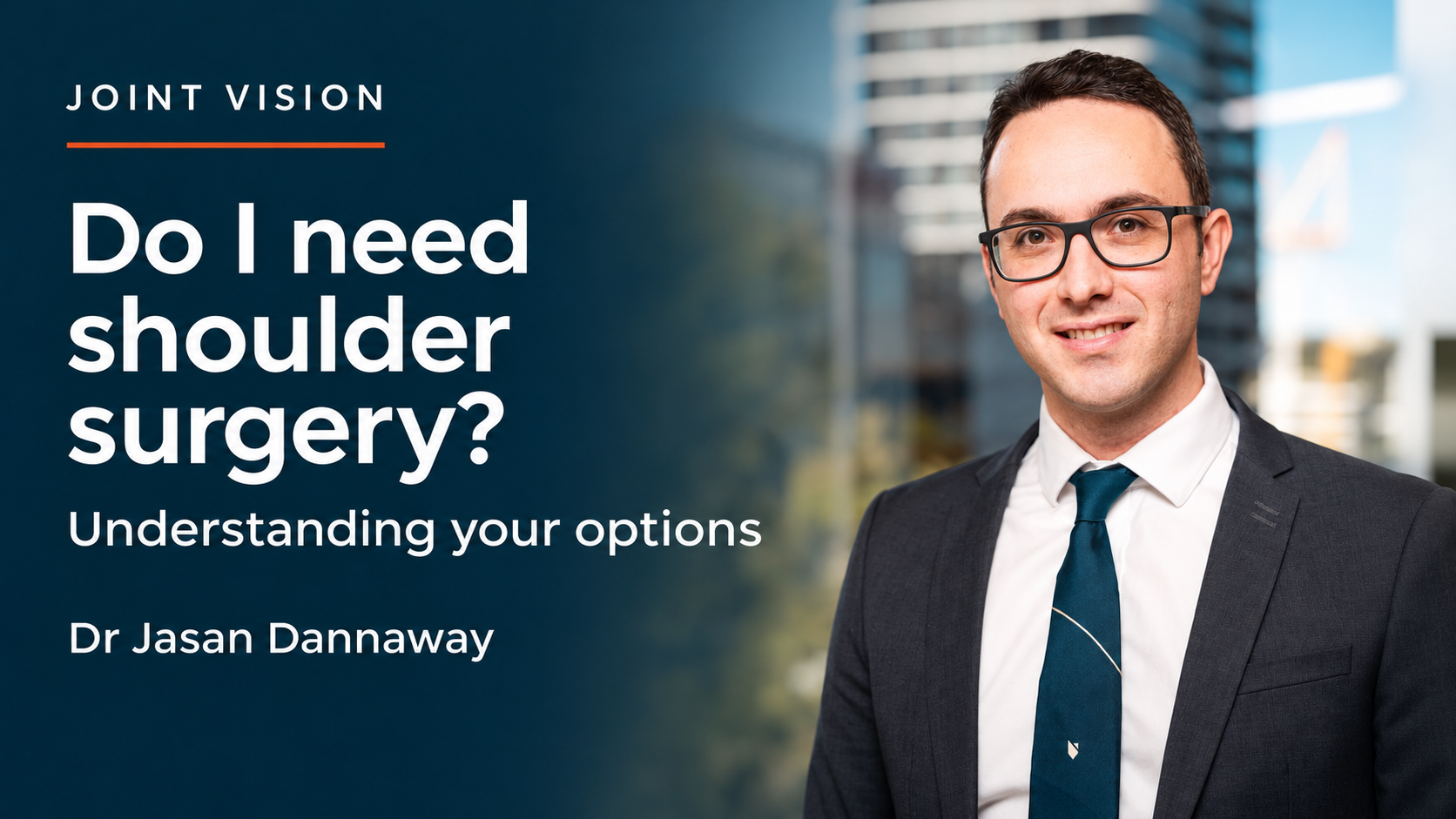
November 12, 2026
Written by
Dr Jasan Dannaway
Do I need shoulder surgery? It's a question many people ask when shoulder pain starts affecting their sleep, work or everyday activities.
Dr Jasan Dannaway, an orthopaedic surgeon at Joint Vision Orthopaedic Group in Wollongong, says seeing a surgeon doesn't automatically mean you need an operation.
"People don't come to see me because they want an operation," Dr Dannaway says. "They come because they want a solution to their problem."
For many patients, that solution doesn't involve surgery at all.
Watch: Meet Dr Jasan Dannaway
Learn about Jasan's background in physiotherapy and his approach to upper-limb care.
What are the non-surgical options for shoulder pain?
Shoulder care starts with choosing the right treatment for the individual. Depending on the diagnosis, options may include:
- Physiotherapy, strengthening and rehabilitation
- Activity modification
- Anti-inflammatory medication
- Injections
- Monitoring symptoms over time
Many shoulder conditions, including mild tendon irritation, bursitis and early degenerative changes, may respond to conservative treatment. Surgery may become part of the conversation when appropriate non-surgical approaches have been explored, or when a condition is unlikely to improve without an operation.
"The decision to operate always starts with making the correct diagnosis," Dr Dannaway explains. "Once you've identified the problem, you then determine how urgent it is and whether surgery is actually the best option."
When might shoulder surgery be considered?
There are situations where surgery may be recommended to address pain, loss of function or further damage. These include:
- Some full-thickness rotator cuff tears
- Certain fractures around the shoulder
- Tendon ruptures
- Shoulder instability following repeated dislocations
- Advanced shoulder arthritis
- Conditions that continue to cause significant pain and disability despite appropriate non-surgical treatment
The diagnosis alone doesn't determine whether surgery is right for you. The discussion also needs to cover the potential benefits, risks, alternatives and recovery involved.
Does an MRI show whether I need surgery?
Scans are one part of the decision. Two people may have similar MRI findings but need different treatment.
"We don't treat scans—we treat people," Dr Dannaway says.
Alongside imaging, the decision depends on your symptoms, pain, loss of function, lifestyle and activity goals, age, overall health, previous treatment and preferences.
A scan helps explain what's happening, but it doesn't make the decision on its own.
When does the timing of shoulder treatment matter?
Some shoulder conditions can be monitored over time. Others need earlier assessment because waiting may affect the treatment options.
"If someone has a fracture, a severed tendon or significant nerve injury, delaying surgery can change what's possible later," Dr Dannaway says. "Other conditions aren't urgent, and surgery can safely be considered whenever the patient feels the time is right."
Some rotator cuff tears can enlarge over time and become more difficult to repair. Ongoing bone loss in advanced arthritis can also make reconstructive surgery more challenging.
An accurate diagnosis helps you understand whether waiting is appropriate for your particular condition.
How is the right treatment decided?
A young person with an acute tendon tear after sport may have different treatment and rehabilitation needs from someone with longstanding arthritis or a chronic rotator cuff tear. Expected recovery and outcomes need to be discussed individually.
"There isn't one answer that fits everybody," Dr Dannaway says. "A lot of what we do is helping patients understand what outcome is realistic for their individual situation."
Jasan's background as both a physiotherapist and orthopaedic surgeon informs his approach to rehabilitation, conservative care and surgery. At Joint Vision, these options connect through the shoulder, elbow, wrist and hand care pathway, with the relevant clinicians involved at each stage.
Discuss your shoulder treatment options
If shoulder pain is affecting your daily life, an assessment can help you understand the cause and discuss your options.
To request a specialist appointment with Dr Jasan Dannaway in Wollongong, speak with your GP about a referral. Patient Services can confirm referral requirements, fees and appointment arrangements.
Request a specialist appointment or call (02) 4250 4500.
For rehabilitation appointments, explore physiotherapy at Joint Vision. If you're unsure where to begin, find the right appointment pathway.
About Dr Jasan Dannaway
Dr Jasan Dannaway is an orthopaedic surgeon specialising in shoulder, elbow, wrist and hand conditions. A former physiotherapist, he combines his surgical training with an interest in rehabilitation, research and medical education. He consults at Joint Vision Orthopaedic Group in Wollongong.
Read more: Why doesn't my shoulder get better?
Information on this website is general and may not apply to your circumstances. It does not replace individual clinical advice. If you have a health concern, use the relevant care pathway or speak with a qualified health professional. Seek urgent help for severe or rapidly worsening symptoms or a possible emergency.
What to do next