
Foot & ankle
Custom Orthotics vs Off-the-Shelf Orthotics: Which Is Right for You?
Podiatrist Steffan Evans explains when a prefabricated orthotic will do the job, and when custom-made devices are genuinely worth the investment.
Back to Insights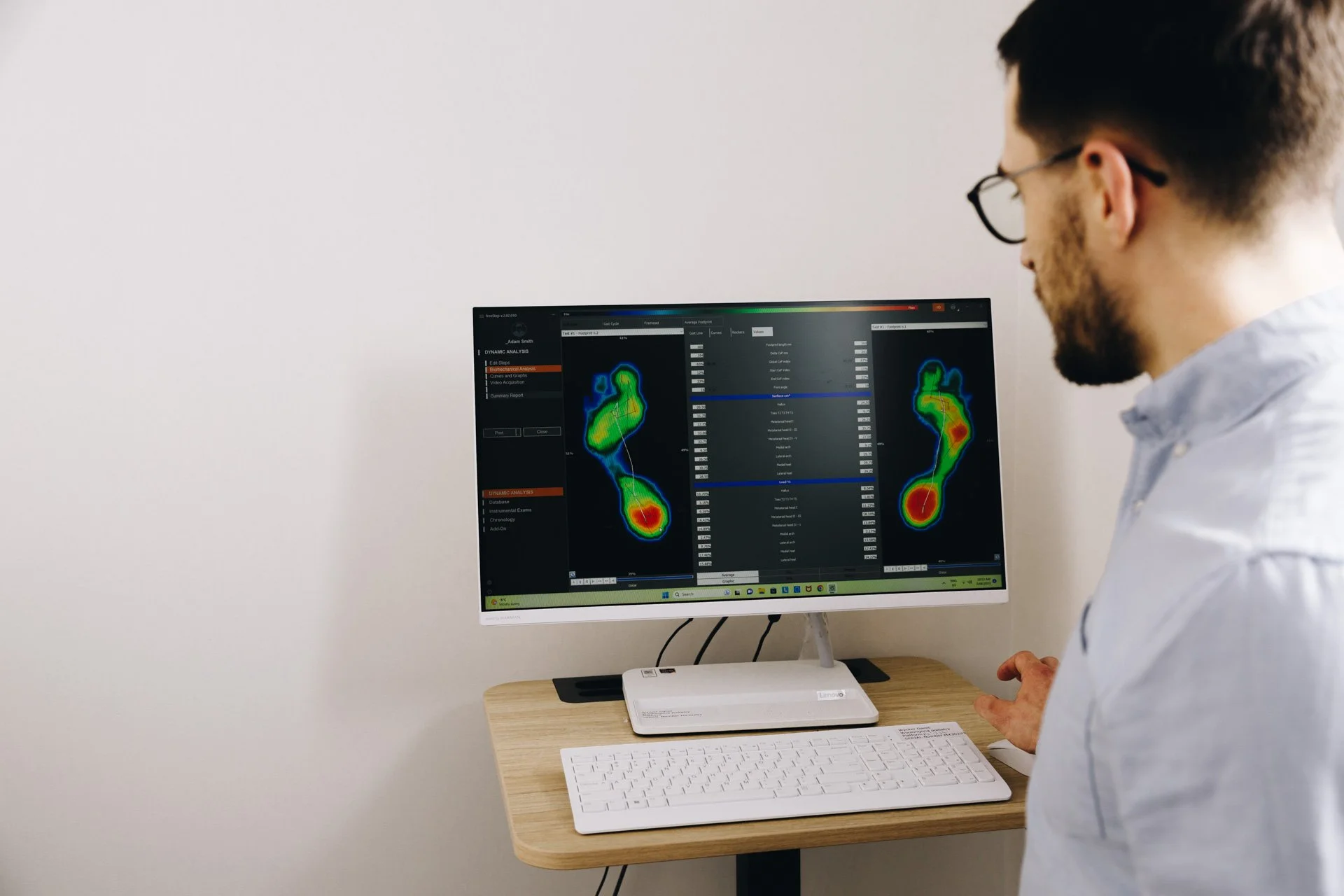
July 23, 2026
Written by
Steffan Evans
If you've been experiencing foot pain, heel pain or recurring aches in your ankles, knees or even lower back, you've probably heard about orthotics.
One of the most common questions patients ask is: "Do I need custom orthotics, or will an off-the-shelf pair do the job?"
According to Joint Vision podiatrist Steffan Evans, the answer depends on your individual feet, your symptoms and what you're trying to achieve.
While custom orthotics are often seen as the "gold standard", they're not always necessary. In many cases, a quality prefabricated orthotic can provide excellent support and pain relief. The key is choosing the right orthotic for the right person.
What Are Orthotics?
Orthotics are shoe inserts designed to support your feet and improve the way your feet and lower limbs function during walking, running and everyday activities.
Depending on your condition, they may help to:
- Reduce pressure on painful areas
- Improve foot alignment
- Redistribute load across the foot
- Provide additional cushioning
- Reduce stress on muscles, tendons and joints
- Improve comfort during work, sport and everyday life
Orthotics are commonly prescribed for conditions such as plantar fasciitis, heel pain, flat feet, high arches, tendon injuries, arthritis, sports injuries, and pain affecting the ankles, knees, hips or lower back.
Importantly, orthotics are usually just one part of a comprehensive treatment plan that may also include strengthening exercises, footwear advice and rehabilitation.
What Are Off-the-Shelf Orthotics?
Off-the-shelf (or prefabricated) orthotics are ready-made inserts manufactured in standard shapes and sizes. Your podiatrist can often trim or modify these devices to improve their fit and provide additional support where required.
For many people, they offer an excellent first-line treatment.
Off-the-shelf orthotics may be suitable if you:
- Have mild to moderate foot pain
- Need additional cushioning or arch support
- Have relatively straightforward foot mechanics
- Are recovering from a recent injury
- Want to trial orthotics before investing in a custom device
Benefits include lower cost than custom orthotics, immediate availability, comfort and support, and the ability to be modified to improve pressure relief.
What Are Custom Orthotics?
Custom orthotics are individually designed for your feet following a comprehensive podiatry assessment.
This assessment may include a detailed foot and ankle examination, walking or running gait analysis, footwear assessment, muscle strength and flexibility testing, and a 3D foot scan or cast.
Using this information, an orthotic is manufactured specifically for your foot shape, movement patterns and treatment goals. Every aspect of the device — including support, cushioning, materials and corrective features — is tailored to your individual needs.
Custom orthotics may be recommended if you:
- Have persistent or recurring pain
- Have complex foot mechanics, such as significantly flat feet or high arches
- Have sustained a specific injury requiring precise pressure relief or motion control
- Participate in regular sport or high-impact activities
- Spend long hours standing or walking at work
- Have multiple lower limb problems affecting your feet, ankles, knees or hips
Benefits include individually designed fit, more precise biomechanical support, better pressure redistribution, tailoring for specific sports or work footwear, and typically greater durability than basic prefabricated devices.
Which Orthotic Is Right for You?
There isn't a one-size-fits-all answer. Some people achieve excellent results with an off-the-shelf orthotic, while others require the additional precision that only a custom-made device can provide.
The right choice depends on factors including your diagnosis, the structure of your feet, your walking or running pattern, your activity level, the footwear you wear each day, your work demands and your treatment goals.
A thorough podiatry assessment helps identify the most appropriate option based on your individual circumstances — not simply the most expensive one.
The Bottom Line
Both prefabricated and custom orthotics can be highly effective when they're prescribed appropriately.
Off-the-shelf orthotics provide a convenient and affordable solution for many common foot conditions, while custom orthotics offer a more tailored approach for people with complex biomechanics, persistent pain or specific functional requirements.
The best way to determine which option is right for you is through a comprehensive assessment with an experienced podiatrist.
At Joint Vision Orthopaedic Group, our podiatry team works closely with our orthopaedic surgeons and allied health professionals to ensure every patient receives the treatment that's most appropriate for their condition, lifestyle and long-term goals.
Information on this website is general and may not apply to your circumstances. It does not replace individual clinical advice. If you have a health concern, use the relevant care pathway or speak with a qualified health professional. Seek urgent help for severe or rapidly worsening symptoms or a possible emergency.
What to do next