

Basketball Injuries: When Should You Stop Playing and Get It Checked?
Basketball is fast, physical and demanding on the body.
Jumping, landing, sprinting and rapidly changing direction are all part of the game — and they're also why injuries are common among basketballers of all ages.
But when is an injury something you can manage yourself, and when is it time to get professional advice?
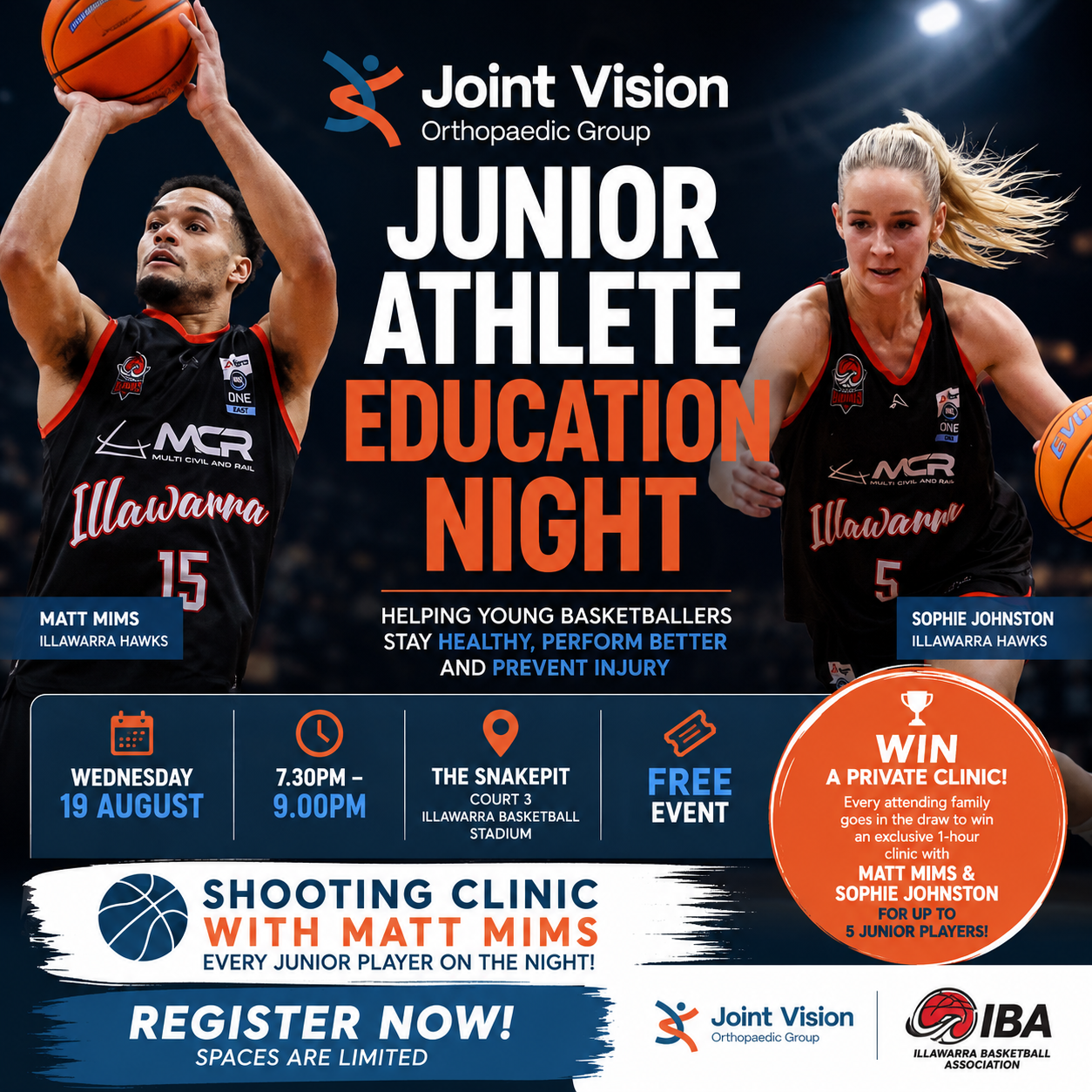
Ahead of Joint Vision's free Junior Athlete Education Night at the Snakepit on Wednesday 19 August, we asked Joint Vision physiotherapist Kat Chounlamountry some of the questions basketballers and parents regularly ask about injuries, rehabilitation and returning to the court.
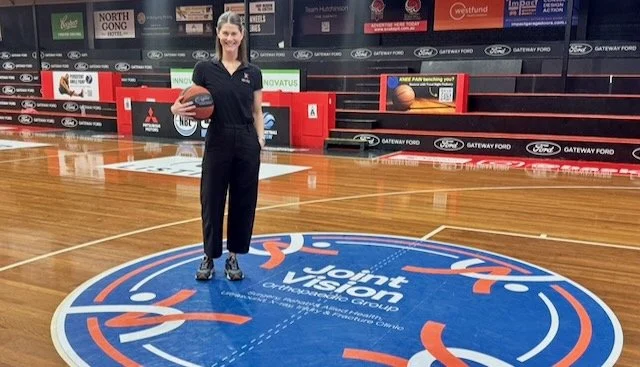
Joint Vision physiotherapist Kat Chounlamountry shares advice for basketballers and parents on injury prevention, rehabilitation and safely returning to the court.
What is the most common basketball injury?
Ankle sprains are by far the most common basketball injury we see.
The combination of jumping, landing and rapid changes of direction places significant stress on the ankle ligaments.
While many ankle sprains recover well, appropriate rehabilitation is important — particularly for athletes returning to basketball.
When should I stop trying to manage an injury myself?
A minor knock or soreness doesn't necessarily require professional treatment.
However, Kat recommends seeking advice if pain, swelling or reduced function persists beyond a few days.
It's also worth getting assessed if the injury is affecting your ability to train, play sport, work or perform normal daily activities.
For junior athletes in particular, persistent pain shouldn't simply become something they learn to play through.
What injury symptoms shouldn't be ignored?
Some symptoms warrant more immediate assessment.
These include:
Inability to bear weight
Significant swelling
Visible deformity
A joint that locks or feels unstable
Numbness
Inability to move the injured limb
Symptoms that are progressively getting worse
If these symptoms occur following an acute injury — particularly in a child or young athlete — assessment through an Urgent Care Centre, Emergency Department or the Joint Vision Fracture Clinic may be appropriate depending on the severity of the injury.
What happens when you see a physiotherapist for a basketball injury?
The first step isn't simply treating where it hurts.
A physiotherapist will look at how the injury occurred before examining the affected area and assessing factors including movement, strength and function.
From there, they can determine whether rehabilitation is appropriate or whether further investigation is needed.
That could include imaging or referral to an orthopaedic specialist.
Do basketball injuries usually require surgery?
No.
Most basketball injuries can be managed successfully with appropriate rehabilitation.
Surgery is generally reserved for particular injuries, including some fractures and significant ligament injuries, or situations where an injury has failed to improve with conservative treatment.
Seeing a health professional about an injury doesn't mean you're heading for surgery. Often, getting the right diagnosis early allows an appropriate rehabilitation program to begin sooner.
What's the biggest mistake basketballers make after an injury?
Returning to the court too quickly.
Pain improving doesn't necessarily mean rehabilitation is finished.
Many athletes stop their rehabilitation once the injury starts feeling better, but restoring strength, balance and confidence is an important part of reducing the risk of another injury.
The goal isn't simply to become pain-free.
It's to be ready to play basketball again.
Do I need a referral to see a physiotherapist?
No.
Physiotherapists are primary healthcare practitioners, which means you can make an appointment directly without requiring a referral.
If further investigation is needed, Joint Vision can also arrange imaging or referral to one of its orthopaedic specialists for further assessment.
What's the one thing parents of junior athletes should remember?
Don't ignore persistent pain.
Young athletes naturally want to keep playing, particularly when they're part of a team or have an important game approaching.
But Kat says early assessment and management can prevent a relatively minor problem from becoming a longer-term issue.
Early treatment can also help young athletes achieve a faster and safer return to sport.
Learn More at Joint Vision's FREE Junior Athlete Education Night
Joint Vision and Basketball Illawarra are bringing this advice to the court with a free Junior Athlete Education Night for young basketballers and their parents.
The interactive evening will cover injury prevention, movement, recovery, footwear and practical strategies for keeping young athletes healthy and playing the sport they love.
And there'll be plenty of basketball too.
Every junior player attending will finish the evening with a shooting clinic led by Illawarra Hawks NBL1 star Matt Mims.
Every attending family will also go into the draw to win an exclusive one-hour private basketball clinic with Matt Mims and Sophie Johnston for up to five junior players.
Wednesday 19 August 2026
7.30pm – 9.00pm
Court 3, The Snakepit
FREE – registrations essential
Register now:https://form.jotform.com/262060277422047