
Recovery & rehabilitation
When Can You Drive After Injury or Surgery? A Physiotherapist's Guide to Returning to the Road
Coming out of a CAM boot is not the same as being ready to drive. Physiotherapist Kat Chounlamountry explains how driving readiness is actually assessed.
Back to Insights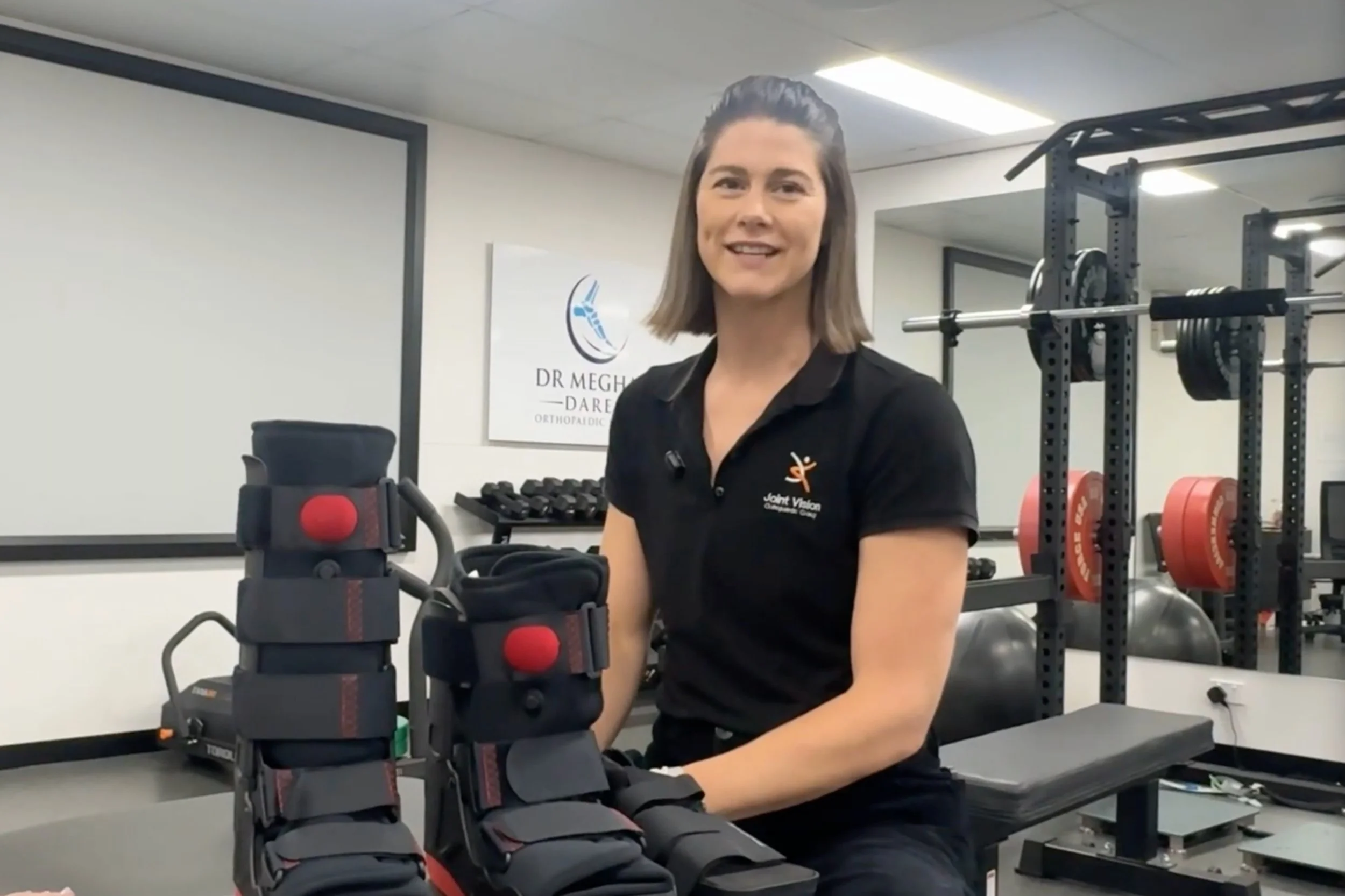
November 28, 2025
Written by
Kat Chounlamountry
By Kat Chounlamountry, Physiotherapist, Joint Vision Orthopaedic Group
Returning to driving is one of the most common questions we hear from patients recovering from foot, ankle, or lower-limb injuries — especially those who have been in a CAM (controlled ankle movement) boot after surgery. The challenge is that the answer isn't the same for everyone.
Your readiness to drive depends on your injury, your type of surgery, which leg is affected, and how your recovery is progressing.
1. Your surgeon decides when you can come out of the boot — but that's not the same as being ready to drive
Even once your surgeon clears you to remove the boot, you're generally not ready to drive that same day.
Driving requires more than simply being out of the boot — it relies on mobility, strength, reaction speed, and confidence. That's where physiotherapy assessment becomes essential.
2. We test your range of motion
To safely control the accelerator and brake, your foot needs adequate plantarflexion (pointing down) and dorsiflexion (pulling up).
In the clinic, I assess this in multiple positions. If your foot moves freely, smoothly and feels supple, that's a good sign. If the range is stiff or restricted, it's usually not safe to drive yet.
3. Strength matters, especially for emergency braking
One of the biggest indicators of driving readiness is whether you can safely perform an emergency stop.
I often ask patients this blunt question: "If a child ran out in front of your car, could you hit the brakes hard and fast enough to stop?"
If you hesitate, you've got your answer.
When people pass all our tests, I recommend their first drive take place on a quiet road with someone in the passenger seat. Have them tap the dashboard to cue an emergency stop. If you can brake quickly and confidently, you're generally OK to continue easing back into driving.
4. Left leg versus right leg makes a big difference
If your left leg is injured: You cannot drive with the boot on. Once you're cleared, you need to remove the boot and wear appropriate footwear. In an automatic car, the left leg isn't used, but you still need to consider stitches, swelling, wounds, and comfort.
If your right leg is injured: This is the foot responsible for both acceleration and braking, so the requirements are stricter. You can only drive when the boot is off, you have adequate mobility, you demonstrate safe braking ability, and you pass all our clinical driving-readiness assessments.
And again — you cannot legally drive in a boot, regardless of which leg is affected.
5. Transition footwear matters for safety
At Joint Vision, we stock a range of affordable, supportive post-boot footwear to help you transition safely from the boot back into normal function, including driving. The right shoe can make a real difference in stability, confidence, and control.
6. The bottom line: safety first, always
We know how important driving independence is for work, family, and everyday life. Our goal is always to help you return to driving as soon as it's genuinely safe — never sooner, never later.
If you're unsure whether you're ready, or you'd like an assessment, our physiotherapy team is here to help.
Information on this website is general and may not apply to your circumstances. It does not replace individual clinical advice. If you have a health concern, use the relevant care pathway or speak with a qualified health professional. Seek urgent help for severe or rapidly worsening symptoms or a possible emergency.
What to do next